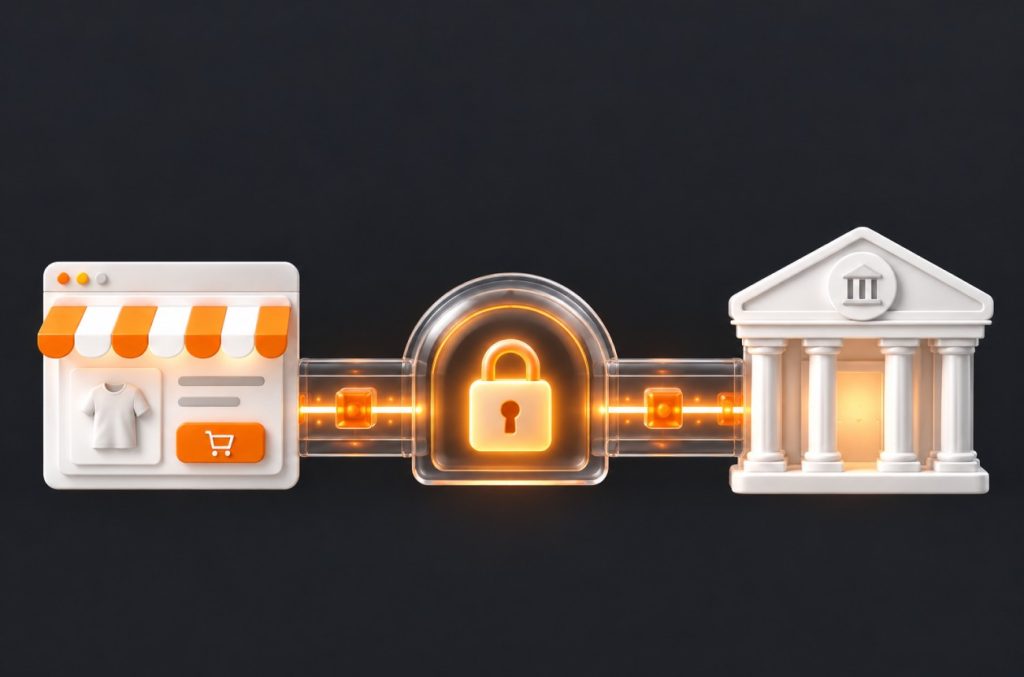
Credit card dominance is fading rapidly as global markets embrace direct bank transfers. You might wonder, exactly what is PIS? A payment initiation service allows businesses to pull funds directly from a consumer’s bank account. This technology bypasses legacy card networks entirely. As of 2026, comprehensive open banking regulations make these transactions secure and highly efficient worldwide. Merchants and consumers now rely on open banking APIs for faster, cheaper checkouts. The key takeaway is that PIS replaces intermediaries with a direct, account-to-account connection.
Understanding Payment Initiation Services and Providers
A Payment Initiation Service Provider (PISP) operates at the core of the financial technology ecosystem. Open banking regulations require strict data encryption to protect consumers while enabling secure data sharing. Several types of organizations can obtain the necessary licenses to operate in this modern space:
- Fintech startups building modern checkout infrastructure.
- Traditional banks expanding their digital service portfolios.
- Specialized payment firms focusing on account-to-account routing.
These authorized entities form the backbone of modern digital finance. Consequently, businesses can accept payments without relying on legacy credit card processors. Regulated providers ensure every transaction maintains strict compliance with international security standards.
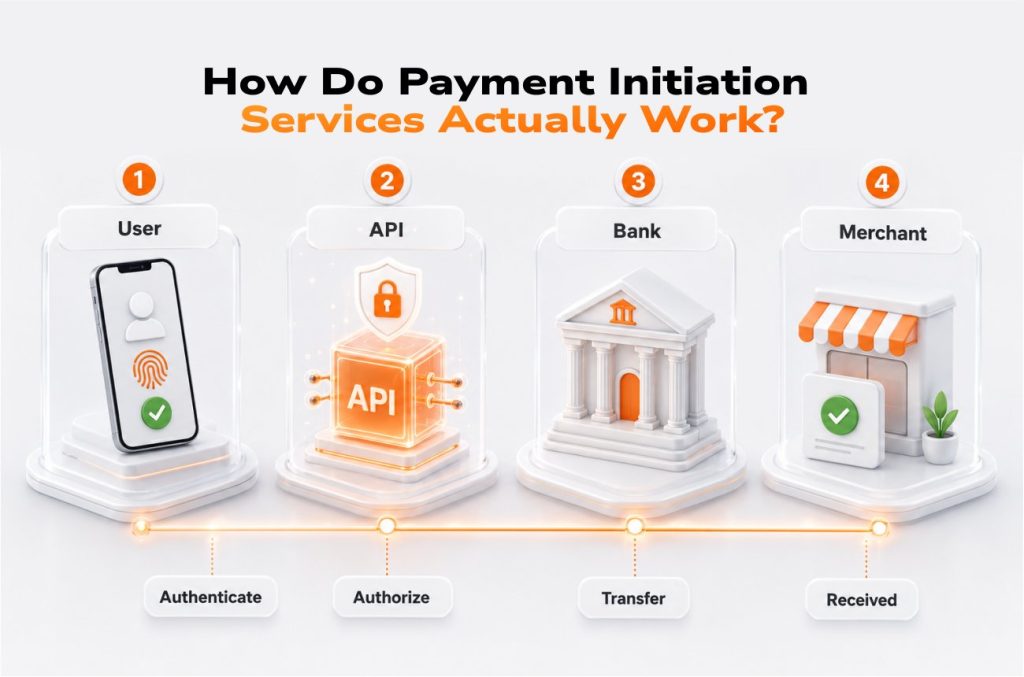
How Do Payment Initiation Services Actually Work?
Modern checkout systems rely on open banking APIs to connect merchants directly to consumer bank accounts. This robust infrastructure bypasses traditional card networks entirely, reducing complex routing protocols. The transaction follows a highly structured, automated sequence to ensure accuracy:
- The consumer selects the direct bank transfer option at checkout.
- The merchant’s payment gateways generate a secure API call to the consumer’s bank.
- The bank quickly authenticates the user and confirms available funds.
- The system executes an immediate account-to-account payment.
This streamlined process drastically reduces processing delays. Therefore, merchants receive funds much faster than they would through conventional clearing houses. Direct API connections eliminate the need for manual data entry and third-party authorization holds.
The Step-by-Step Pay-by-Bank Transaction Flow
Shoppers experience a highly intuitive pay-by-bank checkout process today. First, they choose their specific financial institution from a secure digital menu. The platform then redirects them to their mobile banking app for strong customer authentication (SCA). Users verify the transaction using biometrics like Face ID or a fingerprint. Finally, the app instantly redirects them back to the merchant site. Furthermore, the entire flow takes only seconds to complete. Consumers never have to type long card numbers or expiration dates again.
PISP vs AISP vs PSP: Key Differences
Financial acronyms often confuse even experienced merchants. An Account Information Service Provider (AISP) analyzes financial data but cannot move money. A traditional Payment Service Provider (PSP) manages card transactions and merchant accounts. Conversely, a PISP focuses exclusively on initiating direct bank transfers. Understanding the AISP vs PISP distinction is crucial for regulatory compliance. Similarly, comparing a PSP vs PISP highlights the massive shift away from legacy card networks toward direct routing.
| Provider Type | Data Access Rules | Fund Movement Capabilities |
| AISP | Read-only access to view financial data | Cannot move funds or initiate transfers |
| PSP | Processes traditional credit card numbers | Holds merchant funds in settlement accounts |
| PISP | Direct API write access for payments | Initiates immediate direct bank transfers |
Choosing the right partner depends entirely on your specific business requirements. Many modern platforms combine these licenses to offer a comprehensive suite of financial tools.
Top Global Business Use Cases for PIS
Businesses across various sectors leverage the payment initiation service for superior efficiency. Companies operating high-volume platforms benefit massively from direct A2A payments. The technology adapts exceptionally well to both local and cross-border payments:
- E-commerce checkout: Online retailers reduce processing costs on large consumer purchases.
- Lender disbursements: Financial institutions instantly issue loan payouts to approved borrowers.
- Crypto platforms: Exchanges enable real-time investment top-ups without card delays.
- Government portals: Tax agencies collect public payments quickly and securely.
These diverse applications demonstrate the incredible versatility of direct routing. Furthermore, industries with high transaction values adopt this technology the fastest. Every sector benefits from the immediate reduction in operational friction.
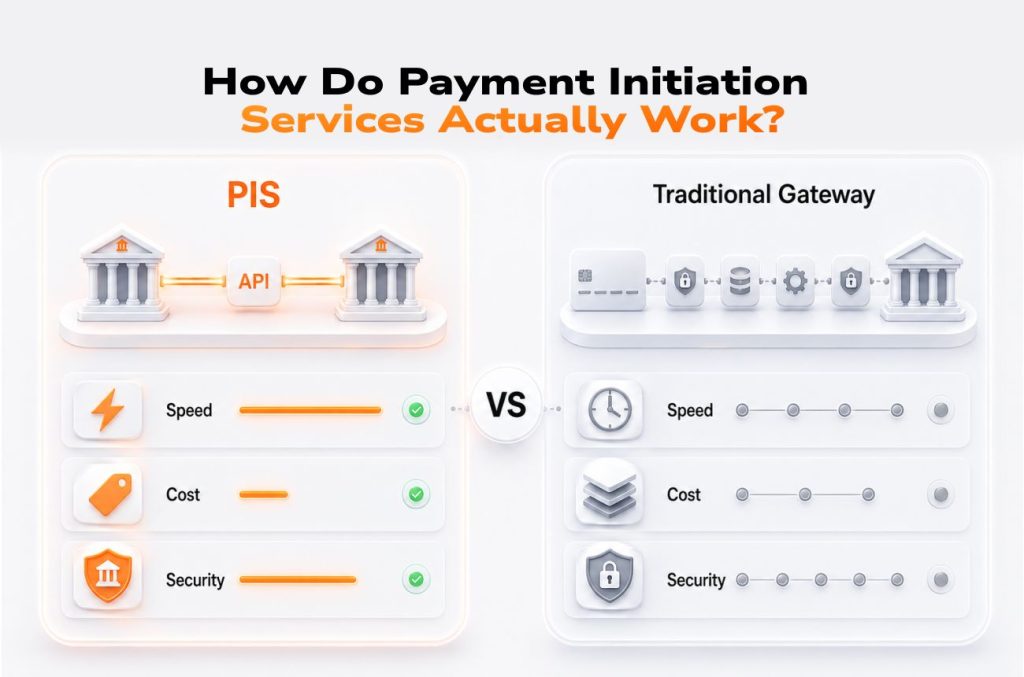
PIS Compared to Traditional Payment Gateways
Direct bank transfers offer distinct advantages over a standard traditional setup. Shoppers know credit cards well, yet traditional payment gateways often charge exorbitant transaction fees. In contrast, open banking protocols dramatically reduce costs while accelerating settlement times. The market demands faster, leaner financial technology infrastructure. However, businesses must weigh these benefits against established consumer habits before fully switching.
| Payment Initiation Services (PIS) | Traditional Payment Gateways |
| Speed: Instant settlement directly to accounts | Speed: 1-3 business days for fund clearing |
| Cost: Fixed, minimal transaction fees | Cost: High percentage-based merchant fees |
| Security: Bank-level authentication (SCA) | Security: Vulnerable to card theft and chargebacks |
Transitioning to direct methods improves overall cash flow dramatically. Merchants essentially trade a small amount of consumer familiarity for significant operational savings.
Core Benefits of Payment Initiation Services
Implementing this technology creates immediate positive impacts for everyone involved. Both buyers and sellers gain significant advantages from modern financial infrastructure. The mutual benefits drive rapid global adoption across all markets:
- For Merchants: Businesses see improved merchant profit margins, zero chargeback fraud, and true instant settlement.
- For Consumers: Shoppers experience faster checkouts, robust data encryption, and reduced cart abandonment rates due to simplified flows.
These advantages clearly explain why legacy systems are rapidly losing market share. Therefore, upgrading your checkout experience is no longer optional. Protecting your bottom line requires adopting the most efficient transaction methods available today.
Modernize Your Checkout Infrastructure With TODA Pay
Direct account-to-account technology is rapidly replacing outdated financial systems in 2026. Companies that integrate these solutions enjoy instant settlement, robust security, and significantly higher profit margins. You no longer have to pay high percentages to traditional middlemen. Embracing this innovation ensures your business remains competitive in a fast-paced digital economy. Start upgrading your financial operations right now. Discover how you can easily integrate a secure Open Banking Payment solution with TODA Pay. Transforming your transaction flow guarantees a better experience for every single customer.
PISP and PIS Frequently Asked Questions
This section covers common inquiries regarding modern payment routing and security protocols. Read below for clear answers on global availability, dual licensing, and cross-border capabilities.
What is the main purpose of PIS?
The primary goal is facilitating secure, direct bank transfers. This bypasses costly intermediaries to reduce overall transaction fees.
How does PIS improve e-commerce payment security?
It utilizes strong customer authentication directly through the user’s banking app. This eliminates the risk of stolen credit card numbers.
Are payment initiation services available globally today?
Yes. While Europe pioneered the framework, major global markets now universally support standardized open banking regulations.
Can a business be both AISP and PISP?
Absolutely. Many financial technology firms hold dual licenses to both analyze account data and process immediate payments.
Do payment initiation services support cross-border payments?
They do. Modern open banking APIs efficiently route international transactions, drastically reducing traditional currency conversion delays.