Mobile transactions currently capture over 60% of all global digital purchases in 2026. Technical founders and product leads require robust infrastructure to handle this massive m-commerce volume. We evaluate the best mobile app payment gateway architectures, comparing native mobile SDK options against traditional webviews. Furthermore, this analysis examines fee models specifically tailored for high-growth iOS and Android applications. You must balance sub-second checkout speeds with ironclad security and favorable interchange margins to maximize profitability. Therefore, selecting the correct processor determines your long-term operational success.
How Does a Mobile Payment Gateway Actually Work?
Technical infrastructure connects your application directly to global acquiring networks during mobile app payment processing. Understanding this technical sequence ensures you optimize the exact moments where users drop off.
- The user presses “Pay”, triggering a biometric Face ID or fingerprint check.
- The native mobile SDK generates a secure token for the transaction.
- The system routes this tokenized payload through the payment gateway for mobile apps.
- An API integration forwards the request to the acquiring network.
- The processor clears the funds with the issuing bank.
- The application displays a successful confirmation screen instantly.
Modern architectures utilize native tools like mobile wallet and Apple Pay integration to keep applications extremely lightweight. Consequently, this tokenization eliminates sensitive PAN data storage directly on vulnerable client devices.
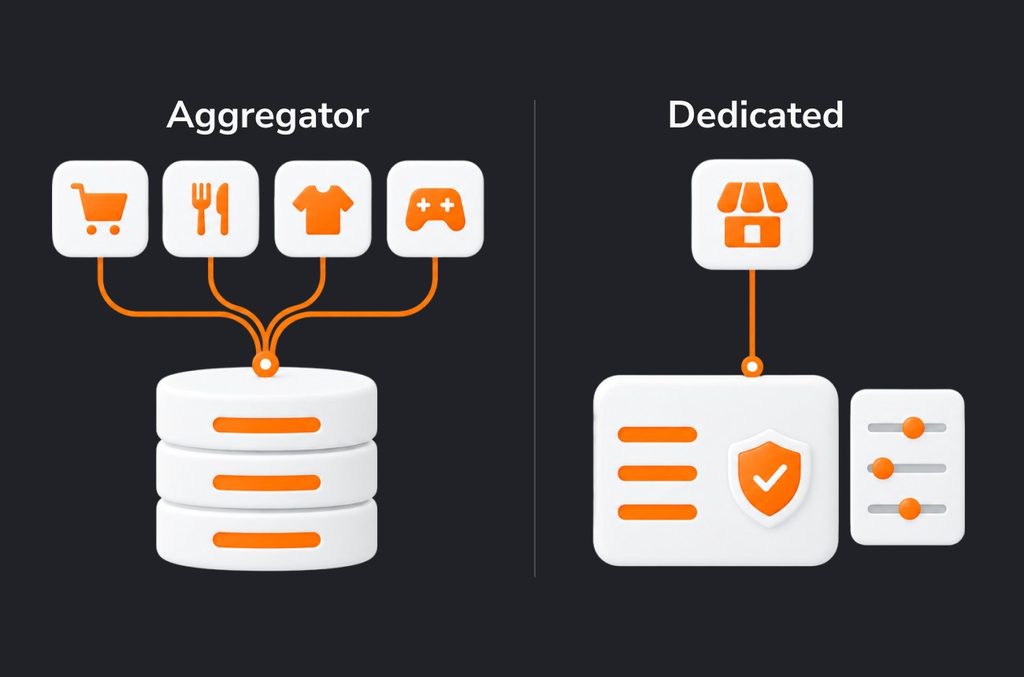
Dedicated Merchant Account vs PSP Aggregator for Apps
Growing applications must choose between a pooled PSP aggregator and a dedicated merchant account. Evaluating these structural options prevents unexpected financial disruptions as your transaction volume spikes.
| Feature | PayFac Aggregators | Dedicated Merchant Gateways |
| Onboarding Speed | Quick sandbox access | Custom underwriting process |
| Account Stability | High risk of sudden freezes | Highly stable, customized limits |
| Interchange Control | Blended, expensive flat rates | Transparent interchange-plus markup |
| Chargeback Thresholds | Rigid, strict automated rules | Flexible, negotiated risk parameters |
Shared payment service provider pools expose merchants to arbitrary transaction volume caps and immediate account terminations. Therefore, high-volume businesses secure dedicated underwriting to guarantee uninterrupted mobile payment gateway operations.
Comparing In-App Payment Gateway Architecture Models
Development teams evaluate three primary architectural tiers for mobile app payment processing monetization. Long-term app profitability heavily depends on pricing transparency, SDK binary size, and uptime reliability.
| Provider Model | Best For | Pricing Structure | Integration Footprint | Account Hold Risk |
| Dedicated Gateway (TODA Pay) | Scaling high-growth apps | Interchange-plus pricing | Lightweight native SDK | Very low |
| Mass Aggregators (Stripe) | Early-stage prototypes | Blended flat fees | Medium SDK drops | High |
| Enterprise Networks (Adyen) | Omnichannel global retail | Tiered volume pricing | Heavy, complex SDK | Low |
Selecting the best mobile app payment gateway dictates your operational efficiency over the coming years. Securing a dedicated merchant account ensures you maintain complete control over your financial infrastructure.
TODA Pay Dedicated Multi-Rail Mobile Payment Gateway
High-volume fintech apps rapidly outgrow shared platforms and migrate toward dedicated infrastructure. Providers like TODA Pay deliver transparent interchange-plus pricing alongside native SDKs built explicitly for iOS and Android environments. You gain dedicated underwriting, which actively prevents sudden fund freezes during massive traffic spikes. Furthermore, this architecture provides unified connectivity across traditional cards, regional European methods, and direct bank transfers. Dedicated multi-rail gateways protect your profit margins and ensure operational stability as your user base expands globally.
Pros and Cons of PSP Aggregator Platforms
Large payment service provider platforms attract startup developers with comprehensive documentation and quick drop-in libraries. You must evaluate their long-term viability before committing your mobile payment gateway infrastructure.
- Pros: Rapid prototyping capabilities and extensive community support forums.
- Pros: Immediate sandbox access without lengthy compliance underwriting delays.
- Cons: Blended flat fees heavily penalize high-ticket shopping baskets.
- Cons: Algorithmic fraud rules trigger false declines on legitimate users.
- Cons: Rigid risk policies frequently shut down high-volume fintech apps.
These platforms excel during initial product launches but struggle to support mature enterprise scaling. Consequently, growing companies discard these heavy mobile SDK binaries to reclaim their lost processing margins.
Global Enterprise Processors for Mobile App Payments
Global enterprise processors focus heavily on unified omnichannel payments for massive retail corporations. These platforms boast direct acquiring licenses across Tier-1 regions and facilitate complex multi-currency settlement structures. However, their notoriously complex onboarding processes demand extensive engineering resources. Additionally, these providers require multi-million-dollar annual revenue commitments from their merchants. These aggressive minimum volume requirements place them entirely out of reach for fast-growing mid-market applications. Therefore, mid-sized companies need more accessible digital wallets and omnichannel alternatives utilizing interchange-plus pricing.
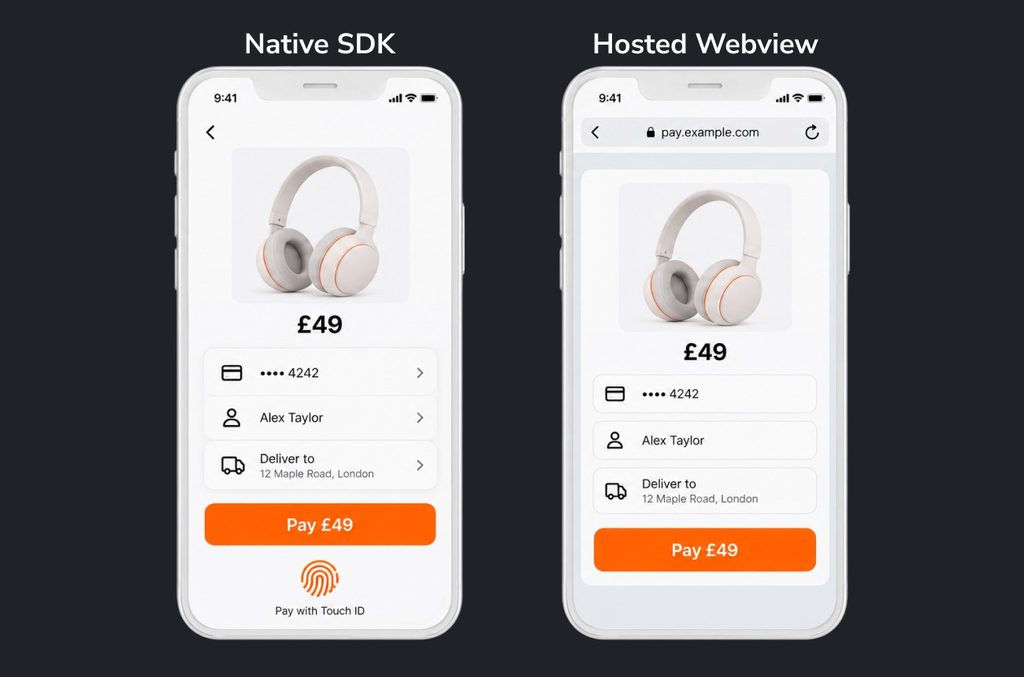
Native Mobile SDKs vs Hosted Mobile Webviews
Engineering teams constantly debate implementing a native mobile SDK versus rendering a hosted webview. This technical decision directly influences your cart abandonment metrics and overall user satisfaction.
| Feature | Native Mobile SDK | Hosted Webview |
| Conversion Rate | 95%+ completion average | High abandonment risk |
| Biometric UX | One-touch Face ID/fingerprint | Broken biometric handoffs |
| Latency | Instantaneous screen rendering | Slower browser load times |
| Maintenance Scope | Requires native app updates | Centralized server updates |
Webviews introduce severe visual friction that frustrates modern mobile shoppers. Conversely, implementing a robust API integration through a native SDK guarantees flawless authentication and protects your mobile app payment processing revenue.
Key Features for Mobile App Payment Architecture
Product managers must require specific capabilities when evaluating a new mobile payment gateway. Reviewing this technical checklist prevents expensive architectural migrations down the road.
- Level 1 PCI DSS compliance achieved through secure client-side tokenization.
- Automated 3DS 2.2 biometric authentication to satisfy regional regulatory mandates.
- Multi-rail flexibility supporting cards, digital wallets, and local bank transfers.
- Instant app-to-app Open Banking payments to bypass traditional card networks.
- Advanced chargeback mitigation tools built directly into the merchant dashboard.
Offering instant mobile bank transfers drastically reduces your interchange overhead. Furthermore, adopting direct bank rails bypasses legacy card dispute schemes, securing your funds immediately upon purchase.
Launch a Frictionless Mobile App Payment Processing Checkout
Mobile conversion ultimately hinges on flawless biometric authorization and dependable underlying acquiring infrastructure. Development teams must rigorously benchmark their gateway sandbox environments against latency and authorization success metrics. You should test these parameters exhaustively before publishing major updates to the App Store and Google Play. Partnering with a reliable processor ensures your application maintains high performance during critical sales events. Upgrade your mobile app payment processing today with TODA Pay to secure the best mobile app payment gateway API integration available.
Frequently Asked Questions About Mobile Payment Gateways
How Do SDKs Protect PCI DSS Compliance?
Native libraries tokenize card data instantly on the device itself. Consequently, sensitive numbers never touch your application servers, drastically reducing your PCI DSS compliance scope.
Payment Gateway vs In-App Billing Library Differences?
In-app billing libraries handle native digital subscriptions (like Apple App Store purchases) and take a 15-30% cut. A payment gateway for mobile apps processes physical goods and external services at a fraction of that cost.
Best Pricing Structure for High-Volume Mobile Apps?
Interchange-plus pricing remains the most cost-effective structure for scaling merchants. It transparently separates network costs from provider markups, unlike expensive blended flat rates.
Can Apps Implement Apple and Google Pay?
Yes, modern gateways allow simultaneous integration of both digital wallets. The platform automatically detects the user’s operating system and presents the appropriate biometric payment option.
App-to-App Open Banking vs Mobile Card Payments?
App-to-app Open Banking authenticates transfers directly inside the user’s banking application. This eliminates card network interchange fees and totally removes the risk of friendly fraud chargebacks.