The global digital economy continues expanding rapidly into 2026. Analysts project market valuations reaching $19.2 trillion by 2030. Selling software, instant downloads, and SaaS subscriptions creates distinct operational realities compared to physical goods. Merchants face immediate delivery expectations and higher digital dispute exposure without physical shipping slips. You need specialized infrastructure to handle these transactions efficiently. A multi-rail payment stack remains essential for maximizing digital checkout conversions and protecting your revenue. Therefore, choosing the best payment gateway for digital products requires strategic planning.
Understanding Digital Products Payment Gateway Mechanics
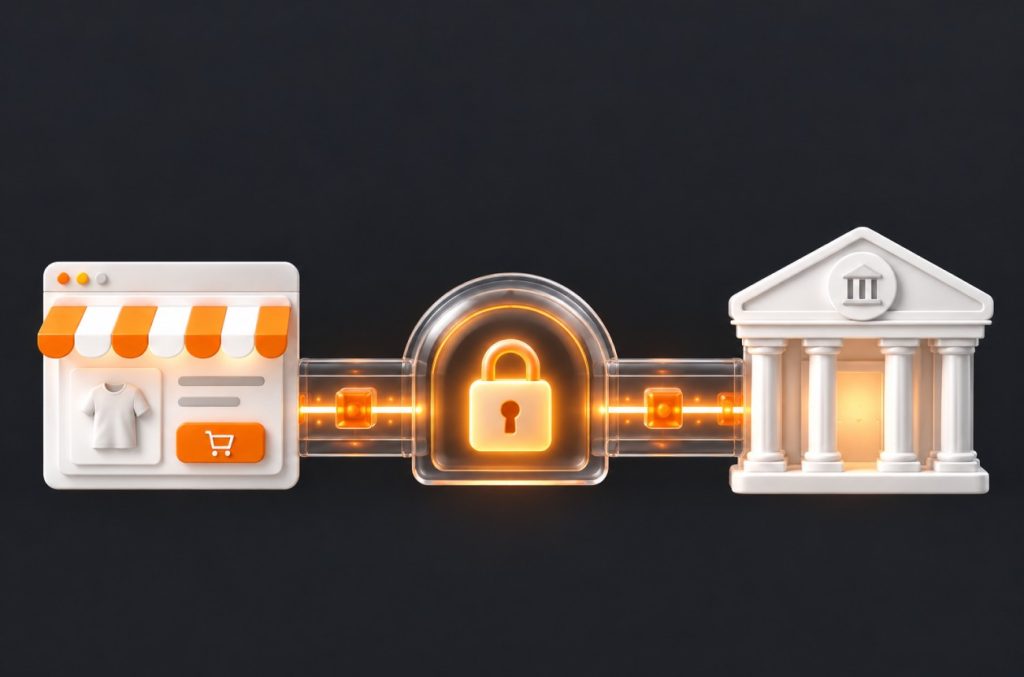
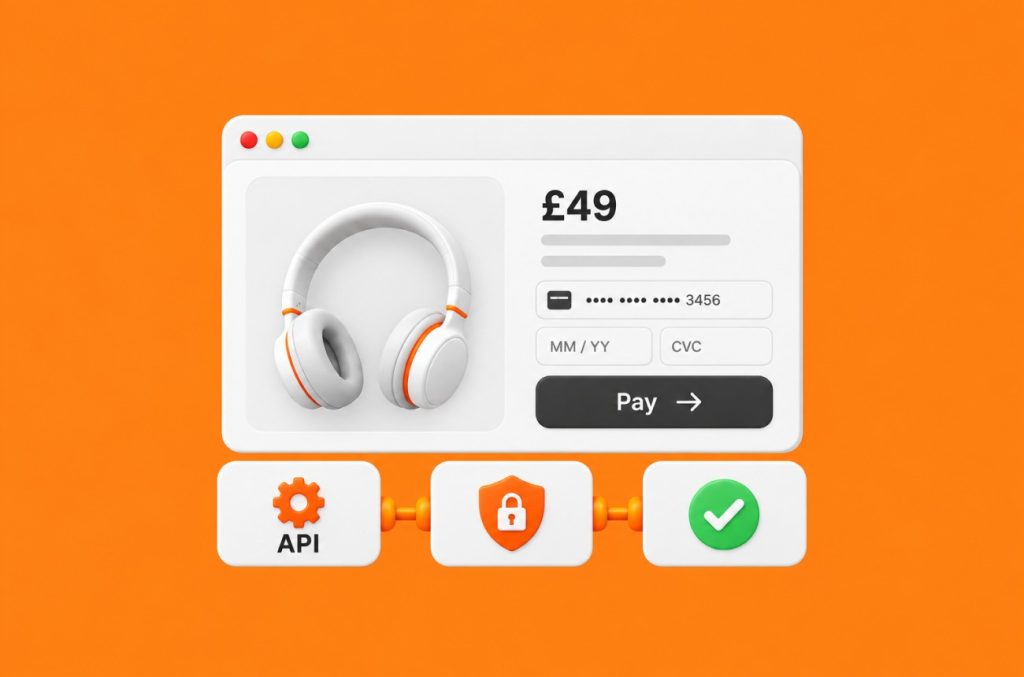
Modern commerce relies heavily on secure transaction routing. The digital products payment gateway encrypts transaction data and tokenises sensitive customer details. Next, it communicates with the acquiring network to finalize the purchase. This process happens instantly to prevent cart abandonment.
- The customer submits their payment details on the checkout page.
- The gateway encrypts this data and performs real-time credential validation.
- The system applies 3D Secure authentication to verify the user’s identity.
- The acquirer processes the transaction and settles funds via your merchant card processing solutions.
Understanding these steps helps merchants identify bottlenecks in their checkout flow. Consequently, you can optimize the entire payment processing experience for global buyers.
Top Payment Rails for Digital Goods Platforms
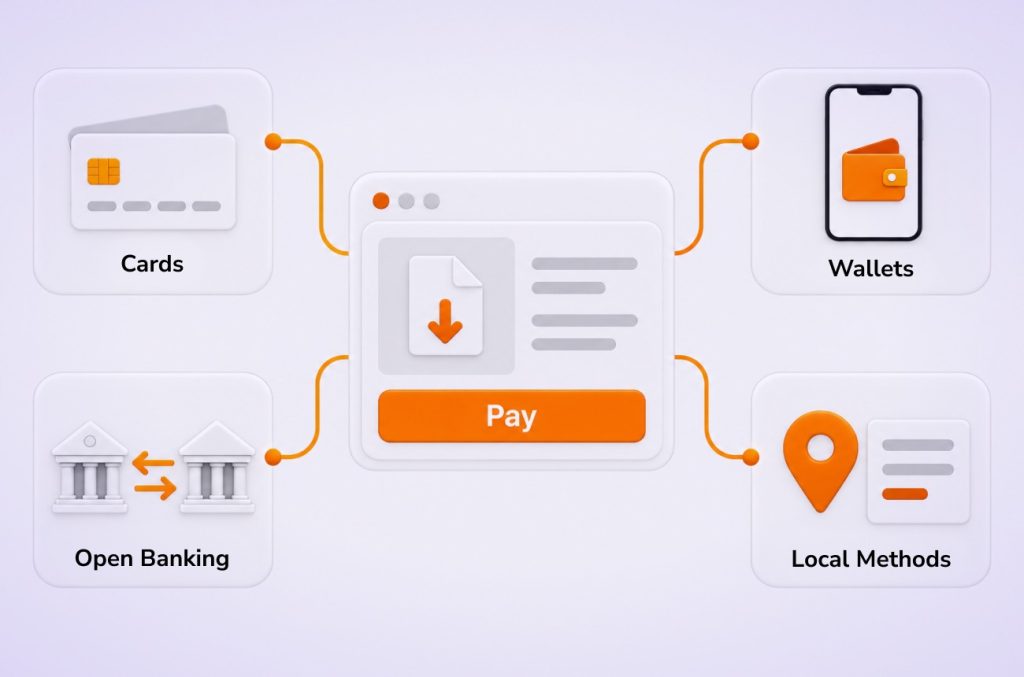
Digital buyers expect diverse checkout options tailored to their regions. Credit and debit cards still drive volume, but alternative methods are aggressively capturing market share. Furthermore, offering the right mix ensures you capture sales across different demographics.
- Cards: Standard global acceptance but carry higher friendly fraud risk.
- Digital Wallets: Apple Pay and Google Pay dominate mobile checkouts globally.
- Open Banking: Account-to-account transfers offer instant liquidity with virtually zero chargeback risk.
- Push Rails: Localized bank transfers provide guaranteed settlement for merchants.
Integrating non-card push rails secures guaranteed settlement for digital downloads without friendly fraud exposure. Therefore, multi-currency support combined with localized options creates the optimal payment environment.
Comparing the Best Payment Gateway Architecture Models
Digital sellers evaluate three primary structural options for their operations. You can choose Direct Multi-Rail Gateways, All-in-One Aggregators, or Merchant of Record platforms. Your margins and control over customer data dictate the right architectural choice. We recommend an objective, data-driven evaluation rather than selecting based on brand recognition.
| Model / Platform Type | Best For | Pricing Model | Dispute & Fraud Risk | Settlement Speed |
| Direct Multi-Rail (TODA Pay) | Scaling merchants | Interchange-plus | Merchant controlled | 1-2 days |
| Aggregator (Stripe) | Developer startups | Blended flat | Platform controlled | 2-7 days |
| MoR (Paddle) | Outsourced compliance | High flat % | Absorbed by MoR | Monthly |
| Wallets (PayPal) | Micro-merchants | Blended tiers | High freeze risk | Instant |
Selecting the optimal architecture directly impacts your bottom line. Therefore, merchants must weigh these structural trade-offs before committing to a specific checkout infrastructure.
Why the Best Payment Gateway Uses Multi-Rail Tech
Scaling businesses frequently migrate to specialized multi-rail payment infrastructures. Combining direct card acquiring with alternative methods under one API integration delivers massive flexibility. You gain transparent transaction fees and dedicated risk management. Furthermore, this model eliminates the threat of unexpected account freezing common with standard aggregators. Direct gateway infrastructure provides significant margin advantages and superior platform stability for high-volume sellers.
Pros and Cons of Digital Products Payment Gateway Aggregators
Large aggregated platforms attract early-stage companies with extensive developer documentation. They enable rapid deployment for startups launching their initial software products. However, digital sellers must evaluate the long-term operational trade-offs carefully.
- Blended flat fees become exceedingly expensive at high transaction volume.
- Automated fraud algorithms frequently trigger false declines on legitimate buyers.
- Aggregators pose a constant threat of instant account termination for intangible goods.
Startups outgrow these platforms quickly as their processing needs mature. Consequently, minimizing transaction fees becomes a critical priority during the global scaling phase.
Merchant of Record Platforms Handle Global Compliance
Merchant of Record platforms operate by acting as the legal reseller of your software. They absorb sales tax and VAT filing responsibilities globally. This convenience requires a heavy financial cost, typically exceeding 5% plus fixed fees per transaction. Moreover, you lose direct relationships with acquiring banks. An MoR proves economically viable for early cross-border testing but severely drains gross margins as subscription volume grows.
Open Banking Enables Low-Fee Recurring Billing Engines
Legacy direct debit systems struggle to support modern digital commerce effectively. Real-time Open Banking rails revolutionize recurring billing and subscription billing for SaaS companies. Instant bank transfers bypass card network interchange fees completely. Furthermore, this technology eliminates involuntary churn caused by expired or replaced credit cards. Direct bank connectivity dramatically lowers payment failure rates and provides immediate business liquidity.
Choosing Your Ideal Digital Goods Payment Processor
Product managers and CFOs must evaluate gateway solutions against strict operational criteria. Selecting a robust digital goods payment processor requires auditing several crucial technical components.
- API Integration: Flexible architectures supporting hosted checkout fields versus server-to-server routing.
- Pricing: Transparent interchange-plus pricing over expensive blended flat rates.
- Security: Strict Level 1 PCI DSS compliance certification to avoid regulatory penalties.
- Risk Management: Advanced chargeback mitigation tools tailored for digital delivery.
Evaluating these factors ensures your payment infrastructure can scale securely globally. Therefore, merchants must prioritize providers offering granular control over the entire transaction flow.
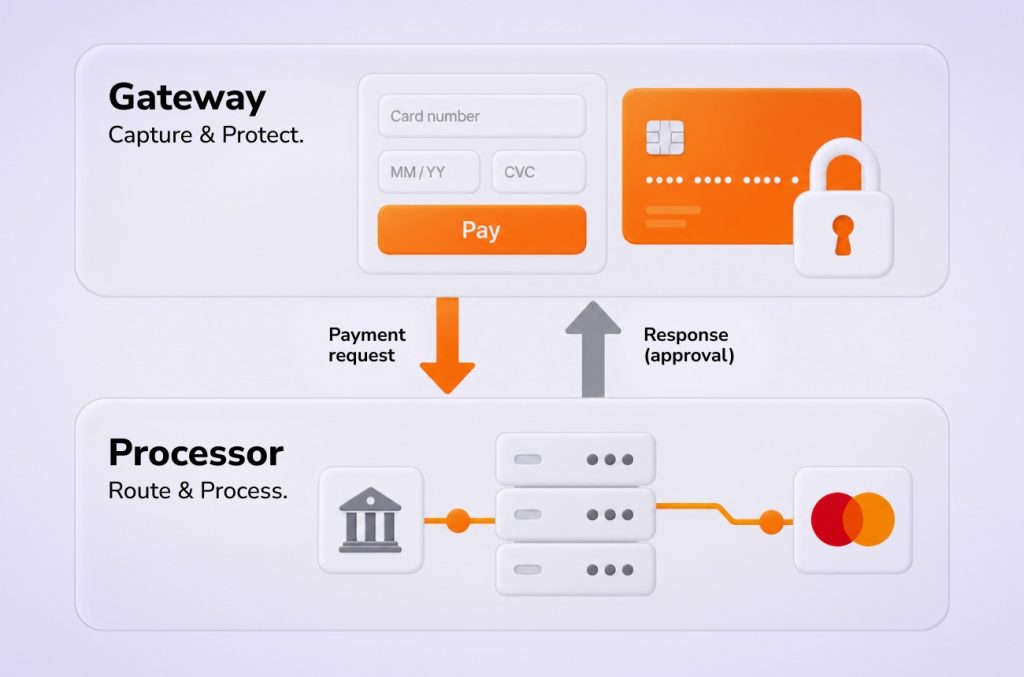
Digital Products Payment Gateway vs Processor Architecture
Many merchants confuse the specific roles of gateways and processors. The gateway acts as the front-facing software capturing and encrypting checkout payloads. Conversely, the payment processor functions as the financial backend routing authorizations through acquiring banks. Modern digital enterprises seek unified providers handling both gateway routing and processing connectivity securely.
| Feature | Gateway Layer | Processor Layer |
| Technical Function | Captures checkout payload via API | Routes authorizations to networks |
| Security Role | Handles tokenisation and encryption | Manages settlement and transfers |
| Fee Components | Per-transaction software fee | Interchange fees and assessments |
Consolidating these two layers reduces technical debt and simplifies financial reconciliation. Ultimately, a unified system protects your digital goods business from unnecessary processing friction.
Securing Best Payment Gateway Margins and Conversions
Balancing multi-currency conversion, low transaction overhead, and chargeback security defines a successful commerce strategy. Digital merchants must actively audit their current processing fees to identify hidden margin leaks. You should implement a hybrid checkout stack combining direct card acquiring with localized push methods. Integrating diverse payment rails guarantees higher approval rates and builds long-term operational resilience. Optimize your checkout flow today by exploring TODA Pay and our European local payment methods for instant digital settlements.
Frequently Asked Questions About the Best Payment Gateway
Digital sellers regularly face complex operational challenges regarding their payment stacks. We compiled concise answers to the top operational questions from software merchants. Reviewing these technical fundamentals helps you build a more resilient checkout architecture.
What is the best payment gateway pricing?
Interchange-plus pricing remains the most transparent and cost-effective billing model. It separates network costs from the provider markup, ensuring significantly lower transaction fees for high-volume merchants.
Do digital product sellers need merchant accounts?
Yes, securing a dedicated merchant account prevents unexpected fund holds. It gives you complete control over your cash flow and direct relationships with acquiring networks.
How do merchants eliminate digital product chargebacks?
Implementing 3D Secure authentication shifts liability back to the card issuer. Furthermore, accepting Open Banking transfers eliminates chargebacks entirely since bank authorizations remain irrevocable.
Can platforms connect multiple payment gateways together?
Yes, merchants use orchestration layers to route transactions across multiple specialized gateways. This strategy optimizes approval rates and ensures continuous checkout availability during unexpected network outages.
When should businesses exit Merchant of Record?
You should transition away from an MoR when compliance fees exceed the cost of internal finance operations. Moving to a direct integration reclaims significant gross margin on every digital sale.