High website traffic means nothing when abandoned checkouts destroy your revenue. Founders often wonder how to create online payment website architectures that actually convert in 2026. Relying on basic shared aggregators causes frustrating drop-offs and unexpected account holds. Instead, deploying a scalable, dedicated payment gateway provides total control over the transaction flow. E-commerce managers must prioritize robust infrastructure over quick, inflexible fixes. Balancing checkout UX, low transaction fees, and account stability determines your long-term success. Therefore, building a dedicated payment processor strategy remains non-negotiable for serious businesses.
Understanding the Online Payment Processing Journey
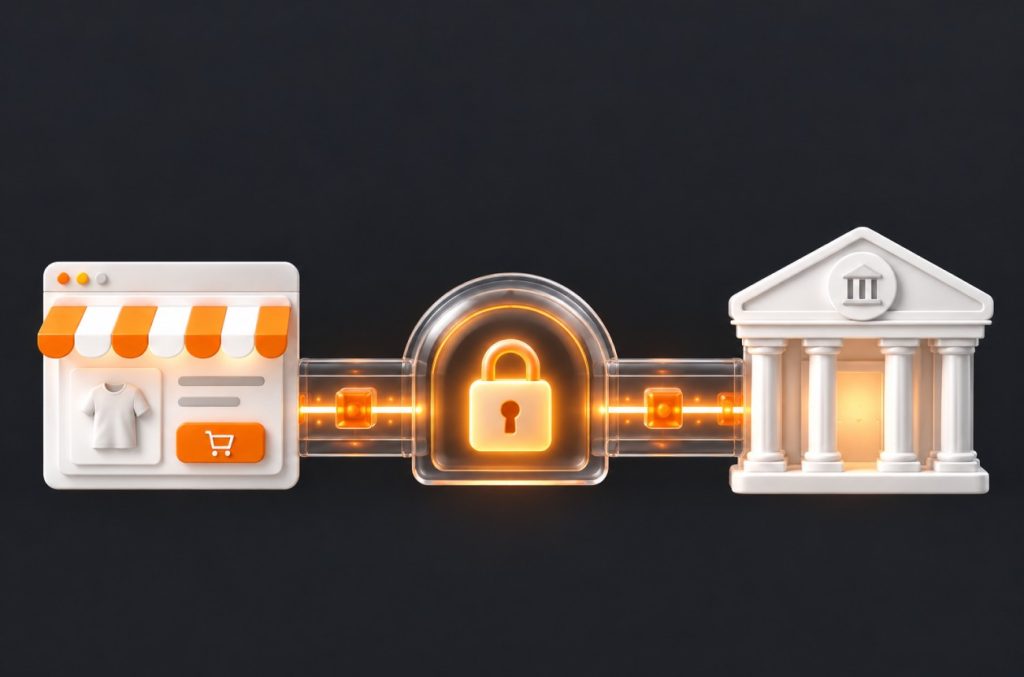
Every digital transaction follows a strict sequence to ensure funds move securely. You must understand these operational roles to optimize your checkout flow.
- The customer enters their card details into the payment gateway.
- The gateway encrypts this data and routes it to the payment processor.
- The processor forwards the transaction request to the appropriate card scheme.
- The acquiring bank receives the request and contacts the customer’s issuing bank.
- The issuing bank approves or declines the transaction based on available funds.
- The processor relays this final status back to the website.
Enterprise merchants secure higher authorization rates and avoid heavy cross-border markups through dedicated processing channels. Furthermore, partnering with robust international card acquiring platforms ensures global revenue flows efficiently. Controlling this exact journey directly impacts your daily cash flow.
Choosing Payment Gateway Integrations: Hosted, Embedded, API
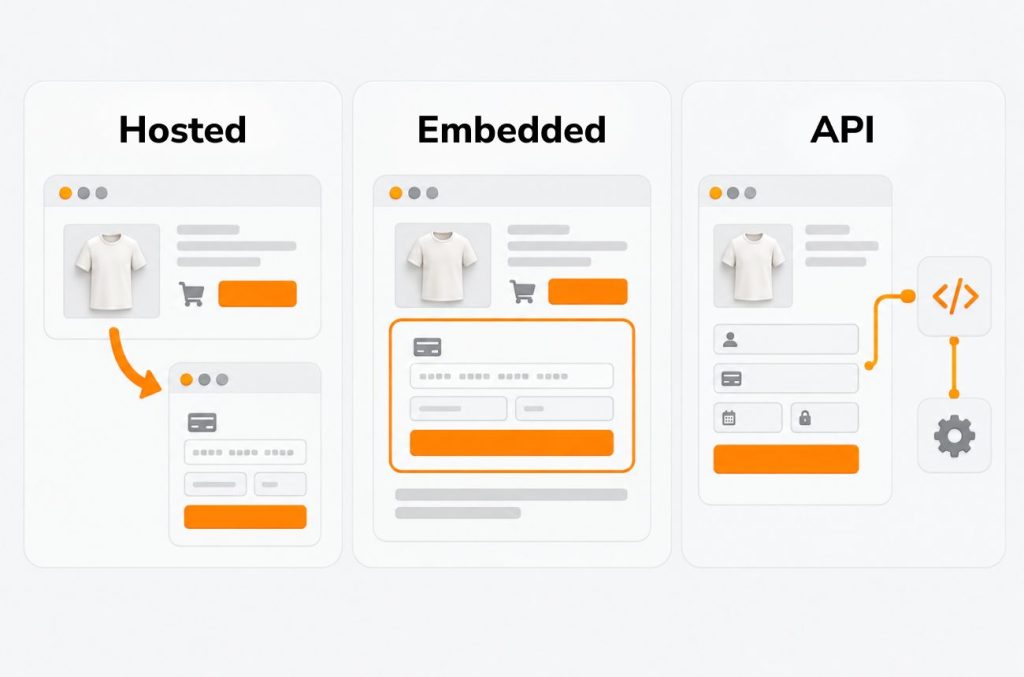
Choosing the right technical structure dictates your user experience and security responsibilities. Different integration methods carry varying levels of technical complexity.
| Integration Type | UX & Conversion Impact | Technical Complexity | PCI DSS Compliance Level |
| Hosted Payment Pages | Off-site redirect, higher drop-off | Very low, rapid deployment | SAQ A (Lowest scope) |
| Embedded (iFrame) | Native on-site visual experience | Medium, requires tokenisation | SAQ A-EP |
| Direct REST API | Total checkout customization control | High, requires dedicated servers | SAQ D (Highest scope) |
Selecting a direct API integration gives you total branding control, while hosted pages launch faster. Therefore, you must align your technical resources with your desired customer experience.
Essential Payment Methods for High-Converting Gateways
Modern buyers demand diverse checkout options tailored specifically to their regional preferences. Providing localized payment methods dramatically reduces cart abandonment rates.
- Cards: Major credit and debit networks dominate global e-commerce volumes.
- Digital Wallets: Apple Pay and Google Pay provide rapid mobile authentication.
- European Push Rails: iDEAL and Bancontact capture massive market share across Europe.
- Account-to-Account: Direct bank payments eliminate traditional network fees.
Integrating A2A options ensures instant settlement while completely neutralizing friendly fraud risks. Additionally, implementing an Open Banking API integration bypasses legacy interchange costs entirely. Offering this strategic mix guarantees higher conversion rates across varied demographics.
Step-by-Step Website Payment Processor Roadmap
Technical teams need a structured deployment plan to prevent critical launch failures. Following a strict sequence ensures your payment processor handles live traffic flawlessly.
- Assess your expected business processing volume and target international markets.
- Underwrite and establish a dedicated merchant account to secure your funds.
- Select the optimal integration method based on your internal developer resources.
- Configure essential webhooks, payment callbacks, and automated customer email receipts.
- Conduct rigorous end-to-end sandbox testing covering successful authorizations and soft declines.
- Verify 3DS challenges and refund loops before deploying to production.
Rigorous testing prevents catastrophic revenue loss during your initial launch phase. A well-executed API integration roadmap builds a resilient, scalable digital storefront.
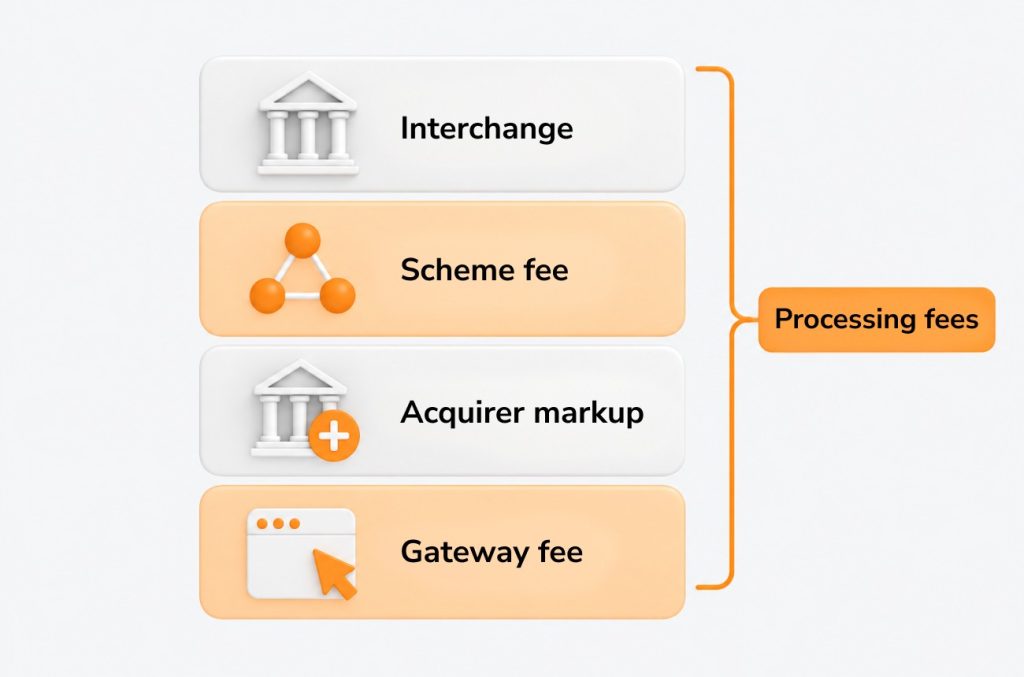
Breaking Down Online Payment Transaction Fees
Accepting payments online incurs multiple layers of distinct processing costs. You must analyze these hidden transaction fees to protect your profit margins.
- Interchange Fees: Banks charge percentages directly for processing the customer’s funds.
- Card Scheme Fees: Visa or Mastercard networks collect small operational assessments.
- Acquirer Markups: Your acquiring bank provider takes a designated margin.
- Gateway Fees: Platforms charge fixed per-transaction costs for data routing.
- Dispute Penalties: Chargebacks cost merchants between £15 and £50 per incident.
Blended flat rates obscure these underlying costs and erode high-volume profits. Conversely, transparent Interchange-plus pricing delivers superior long-term margins for scaling businesses.
Mastering Payment Gateway Security and PCI Compliance
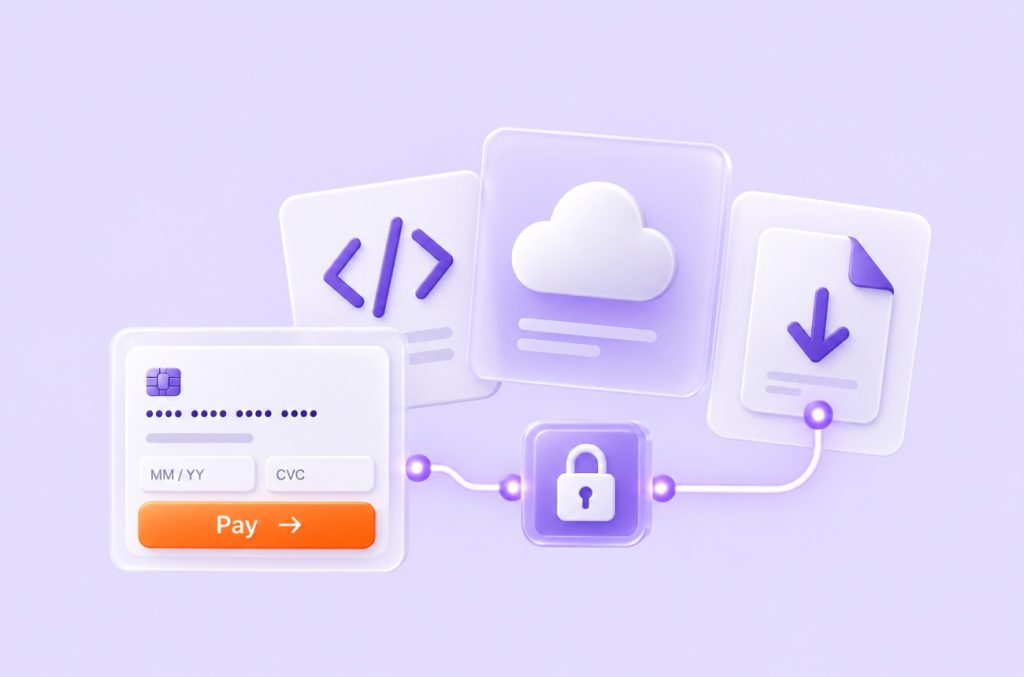
Protecting customer financial data remains a non-negotiable regulatory requirement. Every merchant must adhere to strict PCI DSS compliance standards to operate legally. Utilizing an embedded checkout or tokenisation shifts the heavy compliance burden away from your servers. Consequently, hackers cannot steal sensitive card details from your internal database.
Modern EMV 3DS protocols provide frictionless authentication in the background during checkout. This technology satisfies mandatory regulatory authentication laws across the UK and EEA. Implementing robust tokenisation effectively neutralizes data breach liabilities and protects your brand reputation. Furthermore, advanced 3D Secure authentication stops sophisticated fraud rings without interrupting genuine buyers.
Launching Your High-Converting Payment Gateway Architecture
Moving beyond basic payment buttons requires deploying an optimized multi-rail payment engine. You must combine frictionless card processing with localized bank rails to maximize authorization rates. Evaluating your architecture regularly ensures you stay ahead of changing consumer habits. Partnering with dedicated acquiring experts secures your margins and transforms your checkout into a growth engine. Secure your global revenue today by upgrading your payment processor infrastructure with TODA Pay.
Frequently Asked Questions About Payment Gateways
Digital sellers regularly face complex operational challenges regarding their financial stacks. Reviewing these technical fundamentals helps you build a more resilient checkout architecture.
Aggregator vs. Dedicated Merchant Account Differences?
Aggregators pool funds across thousands of businesses, increasing the risk of sudden freezes. A dedicated merchant account belongs solely to you, ensuring stable, uninterrupted cash flow.
How Fast Are Merchant Funds Settled?
Dedicated acquiring channels typically settle funds within one to two business days. Alternative local methods and account-to-account payments often provide instant liquidity.
Most Cost-Effective Online Card Pricing Model?
Interchange-plus pricing remains the most transparent and cost-effective structure. It clearly separates network costs from the provider markup, minimizing hidden processing fees.
How Does 3DS Prevent Friendly Fraud?
Modern 3D Secure authentication shifts the financial liability back to the issuing bank. This cryptographic verification stops unauthorized chargebacks before they hit your account.
Steps to Accept International Multi-Currency Payments?
You need a platform supporting dynamic currency conversion and local acquiring connections. This setup avoids heavy cross-border fees while presenting prices in local formats.