Borderless finance no longer sounds futuristic — it’s just how business happens now. A freelancer in Lisbon gets paid in three currencies before lunch, while a merchant in Warsaw settles invoices with suppliers overseas. That shift explains why Revolut vs PayPal ranks among the most searched fintech questions of 2026.
Revolut fits people and businesses chasing cheap currency exchange and multi-currency banking, while PayPal stays the safer pick for merchants who need built-in buyer trust. This comparison treats both fairly, covering financial services relevant to individuals, small sellers, and enterprise teams handling cross-border payments daily.
Digital Wallet Origins and Core Philosophies
Revolut launched as an app-based challenger bank built around cheap currency exchange and instant transfers. PayPal, by contrast, started as a legacy digital wallet designed for secure online checkout. That founding difference still shapes each platform’s product roadmap today.
Revolut treats payment processing as one feature inside a broader financial services app covering banking, investing, and spending abroad. PayPal treats payment processing as its core product, built on decades of buyer trust. Neither model wins outright — each simply solves a different problem for a different user.
Personal Finance: Everyday Spending and Travel Perks
Everyday spending is where these platforms feel most different. Revolut leans into multi-currency accounts and virtual debit cards for global travelers, while PayPal focuses on secure transfers and merchant-linked spending. The table below breaks down the core personal finance features side by side.
| Feature | Revolut | PayPal |
| Multi-currency support | Holds and exchanges 25+ currencies, often at interbank rates on paid tiers | Holds balances in select currencies, converted at a less competitive markup |
| Virtual debit cards | Unlimited virtual cards, including single-use cards for safer online checkout | Limited virtual card issuance, usually tied to a linked bank card |
| Subscription tiers | Free, Plus, Premium, Metal, and Ultra tiers unlock travel perks and insurance | Mostly free personal accounts; paid tiers exist mainly on the business side |
Revolut clearly targets frequent travelers who want flexible multi-currency accounts and real travel perks. PayPal, however, keeps its personal accounts simple, prioritizing transfer security over lifestyle extras. Shoppers chasing subscription value will likely find more upside in Revolut’s premium plans.
Crypto Investing and Wealth Management Tools
Wealth tools separate these platforms sharply. Revolut built genuine crypto investing features directly into its digital wallet, letting users buy, hold, and trade digital assets alongside stocks and commodities. It also runs savings vaults with automated round-ups.
PayPal keeps crypto investing limited to buying and holding a handful of major coins, without deeper trading or portfolio tools. Its financial services stay firmly spending-focused rather than wealth-building. Beginners wanting one app for both spending and investing will likely find Revolut’s broader toolkit easier to grow into.
Merchant Services and Global E-commerce Integrations
For online sellers, payment processing needs to work invisibly in the background. Revolut Business and PayPal Checkout both promise that, but the how differs sharply. Revolut concentrates on API integrations, multi-currency invoicing, and recurring billing for subscription businesses. PayPal leans on brand recognition instead, offering one-click checkout that many shoppers already trust.
Merchants connect either gateway to Shopify, WooCommerce, or a custom stack in minutes. Still, the practical benefits diverge once you line them up side by side.
Top Revolut Business Merchant Benefits:
- Multi-currency invoicing with instant FX conversion at low margins
- Native API integrations for custom checkout and reconciliation flows
- Recurring billing tools built for subscription and SaaS models
- Local IBANs across multiple regions look domestic to buyers
- Business debit cards are issued instantly for team expense control
PayPal counters with a different set of strengths, built on reach rather than infrastructure:
Top PayPal Merchant Benefits:
- Instant buyer recognition that can lift checkout conversion rates
- Broad global reach across markets where PayPal is already trusted
- Built-in buyer protection that reduces cart abandonment concerns
- Simple integration through pre-built plugins for major e-commerce platforms
- An established dispute resolution process familiar to most online shoppers
Neither list settles the debate outright. Sellers targeting subscription revenue and tighter reconciliation will likely prefer Revolut’s toolkit, while sellers chasing conversion through brand trust may lean toward PayPal instead.

Point of Sale and In-Person Payments
Online tools matter less if a business also sells face-to-face. Revolut offers a card reader and a POS app that syncs directly with its business account, giving retailers one dashboard for online and in-person payment processing. PayPal counters with Zettle, a comparable card reader built for small retail and pop-up shops.
Both cover the basics well. Revolut’s tighter integration with its own multi-currency account gives omnichannel merchants a slight edge in reconciliation, especially across borders.
Managing B2B Payments and FX Exposure
Larger finance teams care less about convenience and more about proof. When a company pays dozens of suppliers overseas, every transfer needs a clean audit trail, not just a fast one. Revolut Business scales toward this need, offering batch payments, multi-user approval flows, and dashboards built for managing FX exposure across several currencies at once.
PayPal still works for supplier payments, but it never built its infrastructure primarily for enterprise reconciliation. Finance teams handling heavy cross-border payments volume typically report clearer escalation paths through Revolut’s business tools, especially once monthly transaction counts climb into the thousands.
Global Fees, Exchange Rates, and Hidden Costs
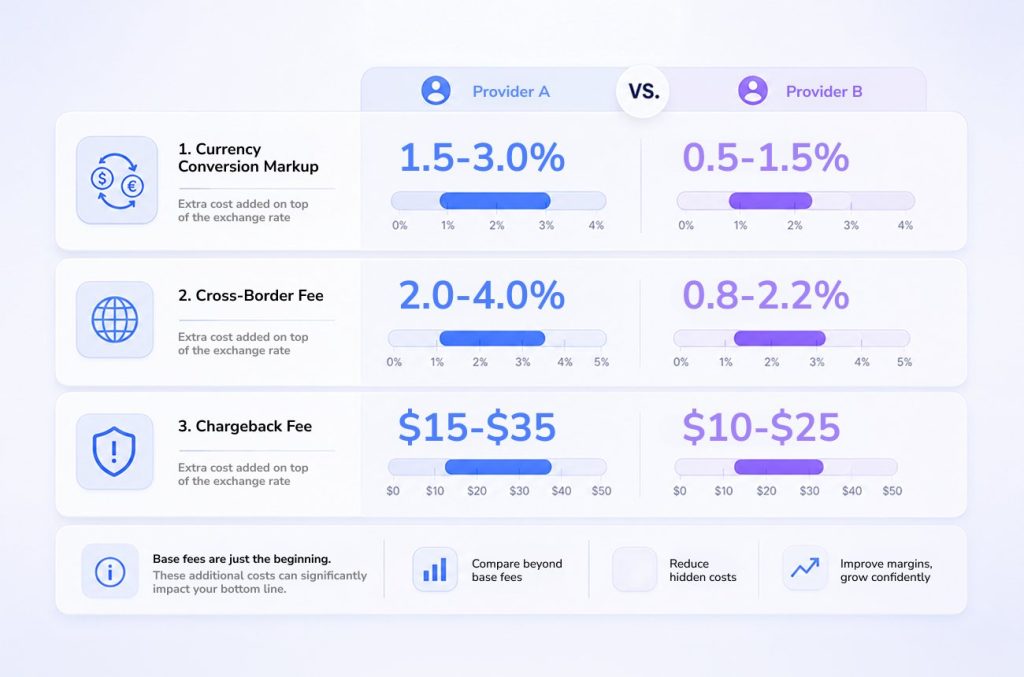
Cost is where most comparisons get vague, so here’s the direct version. Both platforms charge for currency conversion, but they apply the markup differently, and both build in some form of chargeback fees for merchants facing disputes. The table below focuses on structure and percentage models rather than fixed local amounts, since actual rates shift by region and account tier.
| Fee Type | Revolut Structure | PayPal Structure |
| Currency conversion | Interbank rate with a small markup on paid tiers; wider markup on free-tier weekend trades | Fixed percentage markup applied to nearly all conversions, regardless of tier |
| Cross-border payments | Lower percentage fees on business accounts, scaled by transfer volume | Flat percentage fee plus a fixed charge per international transaction |
| Chargeback fees | Charged per dispute, occasionally waived for verified merchants | Charged per dispute, with amounts varying by seller protection status |
Exchange rates rarely tell the whole story alone. Once transaction fees and dispute costs combine, Revolut generally comes out cheaper for high-volume, multi-currency operations, while PayPal’s costs stay more predictable for occasional cross-border payments.
Settlement Times and Merchant Cash Flow Management
Cash flow depends on how fast money actually lands, not just how it gets calculated. Revolut Business generally settles card payments within one to two business days, sometimes faster for verified accounts. PayPal’s settlement window varies more, often landing between one and three business days depending on account history and risk flags.
For small businesses juggling tight cash flow, Revolut’s more consistent settlement window tends to offer a clearer advantage. PayPal can still work well, but its timing carries more variability across different sellers.
Buyer Protection and Dispute Resolution Compared
Trust ultimately decides where people keep their money. Both platforms hold real banking licenses and follow strict compliance rules, but they built their safety nets around different priorities.
Revolut’s Core Security Features:
- Banking license coverage across multiple jurisdictions, protecting deposits by region
- In-app card controls that let users freeze cards or block specific merchants instantly
- Dispute resolution handled inside the app, with case tracking visible in real time
PayPal’s Core Security Features:
- A long-standing buyer protection policy covering eligible purchases against fraud or non-delivery
- An established dispute resolution process backed by decades of case history
- Seller protection programs that shield merchants from certain chargeback fees
Customer support tells a messier story for both providers. Trustpilot reviews stay mixed for each platform, and both face criticism over slow responses during account freezes. Response times remain the weak point across the board, so neither claims a clean win here.
When Open Banking Beats B2B Payments
Neither Revolut nor PayPal solves every problem forever. Once a business scales past a certain volume, generic consumer-grade wallets start to strain under enterprise demands. FX exposure grows harder to hedge, and B2B payments need sharper reconciliation than either platform originally offered.
At that point, dedicated infrastructure often makes more sense. TODA Pay’s European local payment methods are built specifically for cross-border acceptance across the continent, or open banking connections that skip card networks entirely for faster international transfers.
Choosing the Right Financial Services Partner for Growth
Revolut and PayPal both solve real problems, just not the same ones. Revolut wins for currency exchange, multi-currency accounts, and B2B payments at scale. PayPal wins for checkout trust and buyer familiarity in everyday e-commerce. The right pick depends on whether a business needs banking infrastructure or established consumer trust.
For companies whose supplier payments and payroll have outgrown what consumer wallets handle well, TODA Pay’s pay-out solutions offer faster, more transparent international transfers built specifically for B2B payment operations — without forcing a trade-off between speed and control.
Revolut vs PayPal: Frequently Asked Questions
Is Revolut cheaper than PayPal for international transfers?
Usually, yes. Revolut’s interbank-based exchange rates beat PayPal’s fixed markup on most international transfers, especially for larger amounts.
Can I use both Revolut and PayPal for my e-commerce business?
Yes. Many merchants run both, using PayPal for checkout familiarity and Revolut Business for multi-currency accounts and lower processing costs.
Which platform offers better buyer protection for consumers?
PayPal holds the edge here, backed by a longer track record and clearer buyer protection policies for online purchases.
Do both providers offer true multi-currency accounts globally?
Revolut’s multi-currency account support runs broader and more consistently. PayPal’s currency-holding features stay more limited outside core markets.
How do settlement times compare for online merchants?
Revolut typically settles faster and more predictably. PayPal’s settlement times vary more, based on account history and risk assessment.